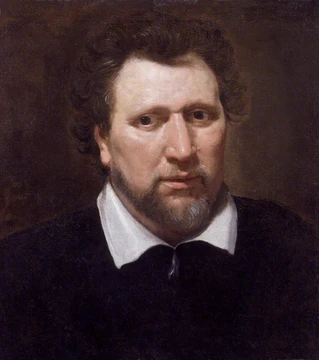
Ben Jonson
English playwright, poet and actor of the Jacobean and Caroline eras.

via Wikipedia: Ben Jonson · see source
Ben Jonson (c. 11 June 1572 – 18 August 1637 [or possibly 6 August]) was an English playwright, poet and actor. His artistry exerted a lasting influence on English poetry and stage comedy. He popularised the comedy of humours; he is best known for the satirical plays Every Man in His Humour (1598), Volpone, or The Fox (c. 1606), The Alchemist (1610), and Bartholomew Fair (1614), and for his lyric and epigrammatic poetry. He is regarded as 'the second most important English dramatist, after William Shakespeare, during the reign of James I.'
- born
- c. 11 June 1572 (possibly 11 June), in or near London
- died
- 18 August 1637 (or possibly 6 August)
- field
- Playwright, poet, actor
- nationality
- English
- known_for
- Comedy of humours; satirical plays Every Man in His Humour, Volpone, The Alchemi
Lore & Background
Jonson was born in June 1572—possibly on the 11th—in or near London. His father, a Protestant clergyman who had lost his property and been imprisoned under Queen Mary, died a month before his son's birth. His widow married a master bricklayer two years later. Jonson attended school in St Martin's Lane in London, then, with a family friend's support, studied at Westminster School, where the antiquarian William Camden was one of his masters; their friendship and Camden's intellectual influence on Jonson's art lasted until Camden's death in 1623. At Westminster he met the Welsh poet Hugh Holland, and both wrote preliminary poems for Shakespeare's First Folio (1623). After leaving Westminster in 1589, Jonson attended St John's College, Cambridge, but returned after a month due to an unwilled apprenticeship to his bricklayer stepfather. He then volunteered as a soldier with English regiments of Sir Francis Vere in Flanders, where the Hawthornden Manuscripts (1619) report he fought, killed an enemy soldier in single combat, and took trophies. Returning to England, he worked as an actor—playing Hieronimo in Thomas Kyd's The Spanish Tragedy—and as a playwright. By 1597 he was employed by Philip Henslowe, and by 1598 Every Man in His Humour established his reputation. Jonson described his wife to William Drummond as 'a shrew, yet honest'; she is sometimes identified as Ann Lewis, who married a Benjamin Jonson in 1594 at St Magnus-the-Martyr. Their eldest daughter Mary died in November 1593 at six months; their eldest son Benjamin died of bubonic plague in 1603 at age seven, prompting Jonson's elegy 'On My First Sonne'. A second son, also named Benjamin Jonson, died in 1635. Jonson and his wife lived separate lives for five years, during which he stayed with patrons Esme Stuart, 3rd Duke of Lennox, and Sir Robert Townshend.
Reader's Guide
Ben Jonson's significance lies in his broad cultural influence on playwrights and poets of the Jacobean era (1603–1625) and the Caroline era (1625–1642). He popularised the comedy of humours, and his satirical plays—Every Man in His Humour (1598), Volpone, or The Fox (c. 1606), The Alchemist (1610), and Bartholomew Fair (1614)—remain central to English stage comedy. His lyric and epigrammatic poetry also contributed to his lasting legacy. Jonson was a classically educated, well-read, and cultured man of the English Renaissance with an appetite for controversy in personal, political, artistic, and intellectual matters. His artistry exerted a lasting influence on English poetry and stage comedy, and he is regarded as the second most important English dramatist after Shakespeare during the reign of James I. His work for the theatre included masques for James's court, such as The Satyr (1603) and The Masque of Blackness (1605), and he enjoyed patronage from aristocrats including Elizabeth Sidney and Lady Mary Wroth. His connection with the Sidney family inspired the country house poem To Penshurst.
Did You Know?
- Jonson's father died a month before his birth, and his mother married a master bricklayer two years later.
- Jonson killed actor Gabriel Spenser in a duel on 22 September 1598 at Hogsden Fields, was tried for manslaughter, and was released by benefit of clergy after reciting a Bible verse and being branded on the thumb.
- Jonson's eldest son Benjamin died of bubonic plague at age seven in 1603, prompting his elegy 'On My First Sonne'.
- Jonson attended a supper party with most of the Gunpowder Plot conspirators in October 1605, and after the plot's discovery he volunteered information to Robert Cecil and the Privy Council.
- Jonson and the Welsh poet Hugh Holland, whom he met at Westminster School, both wrote preliminary poems for William Shakespeare's First Folio (1623).
Dramatic Triumphs and the Comedy of Humours
Ben Jonson carved out a distinctive place in English theatre by championing the comedy of humours, a structural approach that organized characters around dominant temperamental traits. His satirical masterpieces—Every Man in His Humour (1598), Volpone, or The Fox (c. 1606), The Alchemist (1610), and Bartholomew Fair (1614)—remain cornerstones of the Jacobean stage. By 1598, Francis Meres had already singled him out in Palladis Tamia as one of 'the best for tragedy,' though none of those early tragedies have survived. His reputation as a dramatist was cemented when Every Man in His Humour premiered in 1598, with William Shakespeare among the first actors cast. From that point forward he became a fixed creative force within the Admiral's Men company under Philip Henslowe's management at The Rose. Critics and historians have consistently ranked him as the second most important English dramatist of James I's reign, trailing only Shakespeare. Beyond the stage, his lyric and epigrammatic poetry added another dimension to an already formidable literary output, ensuring his influence permeated both dramatic and poetic traditions.
A Formative Youth Forged by Loss and Learning
Ben Jonson's early years were marked by hardship and intellectual curiosity. Born in June 1572—possibly on the 11th—in or near London, he lost his father—a Protestant clergyman who had been imprisoned and suffered forfeiture under Queen Mary—just one month before his birth. His mother remarried a master bricklayer two years later, and Jonson's subsequent apprenticeship to that stepfather would later force him to abandon a brief stint at St John's College, Cambridge, after only a month. A family friend intervened to secure his place at Westminster School, where the antiquarian, historian, topographer and officer of arms William Camden served as one of his masters. Their bond became a lifelong intellectual partnership, with Camden's broad-ranging scholarship shaping Jonson's art and literary style until Camden's death in 1623. At Westminster, Jonson also formed a lasting friendship with the Welsh poet Hugh Holland; both men would later contribute preliminary poems to Shakespeare's First Folio in 1623. After leaving Westminster in 1589, Jonson sought further book learning at Cambridge but was pulled back by his bricklayer obligations, a tension between manual labour and intellectual ambition that would echo through his career. According to the churchman and historian Thomas Fuller, Jonson at this time built a garden wall in Lincoln's Inn.
Controversy, Imprisonment, and a Duel
Jonson possessed a fierce appetite for controversy that repeatedly brought him into conflict with authority. In 1597, a play he co-wrote with Thomas Nashe, The Isle of Dogs, was suppressed after causing great offence. Arrest warrants for Jonson and Nashe were issued by Queen Elizabeth I's interrogator Richard Topcliffe. Jonson was jailed in Marshalsea Prison and charged with 'Leude and mutynous behaviour,' while Nashe escaped to Great Yarmouth; two actors, Gabriel Spenser and Robert Shaw, were also imprisoned. The following year, tensions escalated violently: on 22 September 1598, Jonson killed Spenser in a duel at Hogsden Fields (today part of Hoxton). Tried for manslaughter, Jonson pleaded guilty but was released by benefit of clergy—reciting a brief Bible verse (the neck-verse), forfeiting his 'goods and chattels,' and receiving a branded Tyburn T on his left thumb. During his imprisonment, Jonson converted to Catholicism, possibly under the influence of fellow-prisoner Father Thomas Wright, a Jesuit priest. In 1605, Jonson was again briefly imprisoned with George Chapman for the anti-Scottish sentiment in their collaborative play Eastward Ho! That same year, shortly after his release from a brief imprisonment for topical allusions in a lost play, he attended a supper party with most of the Gunpowder Plot conspirators; after the plot's discovery, he volunteered what he knew to Robert Cecil and the Privy Council.
Grief, Family, and Enduring Cultural Reach
Behind the public brilliance of Ben Jonson lay a private life shadowed by devastating loss. The registers of St Martin-in-the-Fields record that his eldest daughter, Mary Jonson, died in November 1593 at six months of age. A decade later, in 1603, his eldest son, Benjamin Jonson, died of bubonic plague when he was seven years old, prompting Jonson to compose the elegiac poem 'On My First Sonne' (1603). A second son, also named Benjamin Jonson, died in 1635. His wife—sometimes identified as Ann Lewis, who married a Benjamin Jonson in 1594 at St Magnus-the-Martyr near London Bridge—was described by Jonson himself to William Drummond as 'a shrew, yet honest.' For five years the couple lived separate lives, with Jonson taking up residential hospitality under patrons including Esme Stuart, 3rd Duke of Lennox, and Sir Robert Townshend. Yet Jonson's cultural footprint extended far beyond personal sorrow. His influence on the playwrights and poets of both the Jacobean era (1603–1625) and the Caroline era (1625–1642) was described as of 'unparalleled breadth,' and his artistry continues to shape English poetry and stage comedy to this day.
Frequently Asked Questions
Who is Ben Jonson?
Ben Jonson was an English playwright, poet, and actor who worked primarily during the Jacobean and Caroline periods. He is generally regarded as the leading English dramatist of his time after William Shakespeare.
What plays is Ben Jonson most famous for?
His signature satirical comedies include Every Man in His Humour, Volpone, The Alchemist, and Bartholomew Fair. Alongside these, he is also celebrated for his lyric and epigrammatic poetry.
What is the 'comedy of humours' that Jonson is credited with popularising?
It is a comedic form in which each principal character is governed by one dominant, exaggerated temperament, and the plot unfolds through the clashes between those obsessions. Jonson helped cement this structure as a defining mode of early-seventeenth-century English stage comedy.
When and where did Ben Jonson die?
He died in London on 18 August 1637, although some records list the date as 6 August. His life, spanning roughly 1572 to 1637, covered the reigns of Elizabeth I, James I, and Charles I.
Why does Ben Jonson matter to English literature?
His verse and dramatic techniques left a lasting imprint on both English poetry and theatrical comedy well past his own era. He is routinely cited as the second-greatest English dramatist after Shakespeare during the Jacobean age.
More in Playwrights And Dramatists 1-24
Elsewhere in the Playwrights And Dramatists universe
Spotted an error? Know more?
This is a living reference — every entry is fact-audited, and reader corrections feed straight into our audit queue. Suggest an edit · See this site's audit record