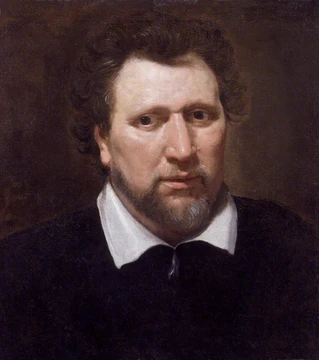
Brendan Behan
Irish writer and Republican whose work drew on prison experiences.

via Wikipedia: Brendan Behan · see source
Brendan Francis Aidan Behan (christened Francis Behan; 9 February 1923 – 20 March 1964) was an Irish poet, short story writer, novelist, playwright, and Irish Republican activist who wrote in both English and Irish. His widely acknowledged alcohol dependence, despite attempts to treat it, impacted his creative capacities and contributed to health and social problems which curtailed his artistic output and finally his life. He is widely regarded as one of Ireland's greatest writers.
- born
- 9 February 1923, Dublin, Ireland
- died
- 20 March 1964
- field
- Poetry, short story, novel, playwriting
- nationality
- Irish
- known_for
- Borstal Boy, The Quare Fellow, The Hostage, Irish Republican activism
Verified Timeline
Lore & Background
Behan was born in Dublin into a staunchly republican family, becoming a member of the IRA's youth organization Fianna Éireann at age fourteen. At sixteen he joined the IRA and was arrested in England for an unauthorized solo bomb mission at Cammell Laird shipyard, serving three years in a borstal. He later was sentenced to fourteen years for conspiracy to murder and attempted murder of two Garda detectives after firing two shots at police following a 1942 commemoration; he was released under a 1946 general amnesty. His prison experiences shaped his writing, including the play The Quare Fellow and the autobiographical novel Borstal Boy. In 1954 his first play, The Quare Fellow, was produced in Dublin; its 1956 production at Joan Littlewood's Theatre Workshop in Stratford, London, gained him wider fame, helped by a famous drunken BBC interview with Malcolm Muggeridge. His Irish-language play An Giall debuted in 1958 at Dublin's Damer Theatre, and its English adaptation The Hostage achieved international success. Borstal Boy became a worldwide best-seller. By the early 1960s he reached peak fame, spending time in New York City with figures such as Harpo Marx and Arthur Miller, and was followed by a young Bob Dylan. His later works Brendan Behan's New York and Confessions of an Irish Rebel received little praise.
Reader's Guide
Brendan Behan's significance lies in his fusion of Irish Republican experience with literary craft, producing works that drew directly from his imprisonment and political activism. His plays and autobiographical novel brought Irish working-class and republican perspectives to international audiences, and his bilingual writing in English and Irish contributed to the cultural revival. However, his alcohol dependence, despite treatment attempts including a dry stretch at the Chelsea Hotel and admission to Sunnyside Private Hospital in Toronto in 1961, curtailed his output and led to his early death at 41. He is widely regarded as one of Ireland's greatest writers, though his later works were less acclaimed. His legacy endures through the continued performance of his plays and the lasting popularity of Borstal Boy.
Did You Know?
- Behan was christened Francis Behan, but was known as Brendan.
- At age thirteen, he wrote a lament for Michael Collins titled 'The Laughing Boy,' based on the nickname his mother used for Collins.
- His uncle Peadar Kearney wrote 'The Soldier's Song,' which became the Irish national anthem Amhrán na bhFiann.
- Behan was sentenced to 14 years in prison in 1942 for conspiracy to murder and attempted murder of two Garda detectives, after firing two shots at police.
- In 1961 he was admitted to Sunnyside Private Hospital in Toronto for treatment of alcohol dependence, but relapsed.
A Dublin Childhood Steeped in Literature and Rebellion
Brendan Behan entered the world on 9 February 1923 at Holles Street Hospital in Dublin's inner city, christened Francis but known to all as Brendan. He grew up in a working-class household that was anything but ordinary. His father Stephen, a house painter who had fought in the War of Independence, filled the children's evenings with readings from Zola, Galsworthy, and Maupassant. His mother Kathleen, a lifelong political activist and personal friend of Michael Collins, guided the family on literary tours of the city. The household was also a crucible of Irish republican culture: his uncle Peadar Kearney wrote 'The Soldier's Song,' which became the Irish national anthem Amhrán na bhFiann, while his brothers Dominic and Brian would go on to make their own marks in song and radical politics. By thirteen, young Brendan had already composed a lament to Collins titled 'The Laughing Boy,' inspired by the affectionate nickname his mother used for the leader. The family's later relocation to a newly-built council housing scheme on Kildare Road in Crumlin, which his father derisively called 'To Hell or to Kimmage,' marked the end of his formal schooling at 13 and the beginning of a house-painting apprenticeship.
Youth, the IRA, and the Forging of a Voice
At fourteen, Behan enlisted in Fianna Éireann, the youth wing of the Anti-Treaty IRA, and began publishing poems and prose in the organization's magazine, Fianna: the Voice of Young Ireland. In 1931 he became the youngest contributor to be published in The Irish Press with his poem 'Reply of Young Boy to Pro-English verses.' By sixteen he had joined the IRA proper and, in a reckless solo act, traveled to England with the intention of detonating a bomb at the Cammell Laird shipyard. British authorities caught him in possession of explosives and attempted to recruit him as an informant, offering relocation under a false identity to Canada or another Commonwealth nation. He refused. The sixteen-year-old was sentenced to three years at Hollesley Bay borstal in the United Kingdom and did not set foot in Ireland again until 1941. During his subsequent imprisonment in Ireland following arrests connected to IRA commemorations during the wartime state of emergency, he taught himself to speak Irish fluently. A general amnesty under the Fianna Fáil government in 1946 finally freed him. In the years that followed, he drifted between homes in Dublin, Kerry, Connemara, and even Paris, carrying with him the raw material that would later fuel his writing.
The Quare Fellow and the Leap to International Fame
Behan's theatrical breakthrough came in 1954 when The Quare Fellow opened in Dublin to warm reception. The play's true explosion, however, arrived in 1956 at Joan Littlewood's Theatre Workshop in Stratford, London, which thrust him onto a far broader stage. A now-legendary drunken television interview with Malcolm Muggeridge on the BBC cemented his public persona as much as the play itself. Two years later, his Irish-language drama An Giall premiered at Dublin's Damer Theatre, and its English-language adaptation, The Hostage, went on to achieve substantial international success. The same year, 1958, saw the publication of Borstal Boy, his autobiographical novel recounting his borstal years, which became a worldwide bestseller. Together, these works established Behan not merely as a Dublin eccentric but as one of the most significant literary voices emerging from Ireland in the mid-twentieth century, a reputation that would carry him across the Atlantic in the years to come.
New York, Decline, and a Life Cut Short
By the early 1960s Behan had reached the height of his celebrity, spending long stretches in New York City where he declared with characteristic bluster, 'To America, my new found land: The man that hates you hates the human race.' He moved in circles that included Harpo Marx and Arthur Miller, and a young Bob Dylan was said to follow him. Yet the fame brought no relief from the twin enemies of alcohol dependence and diabetic conditions that had been eroding him for years. His later books, Brendan Behan's New York and Confessions of an Irish Rebel, drew little critical acclaim. In a brief attempt at sobriety he took a room at the Chelsea Hotel, and in 1961 he was admitted to Sunnyside Private Hospital in Toronto, a facility specializing in alcohol-dependence treatment. Both efforts failed; he relapsed into active alcohol use. His creative output dwindled, his health deteriorated, and on 20 March 1964, at just forty-one, Brendan Behan died, leaving behind a body of work that Ireland still counts among its greatest.
Frequently Asked Questions
Who is Brendan Behan?
Brendan Behan was an Irish poet, novelist, short story writer, and playwright born in Dublin in 1923. He is best remembered for stage works like The Quare Fellow and The Hostage, as well as the memoir Borstal Boy, and is widely regarded as one of Ireland's most important literary voices.
What are Brendan Behan's most famous plays?
His two most celebrated theatrical works are The Quare Fellow (1954) and The Hostage (1958), both of which channel his personal experiences with imprisonment and Irish Republican politics into darkly comic drama.
What was Brendan Behan's connection to Irish Republicanism?
Behan was an active IRA member who spent time in prison for his political involvement. Those incarceration experiences became the raw material for much of his fiction and drama, including Borstal Boy and The Quare Fellow.
How did alcoholism affect Brendan Behan's life and career?
His well-documented struggle with alcohol limited his productive years and caused serious health problems that ultimately contributed to his death in 1964 at age 41. Despite repeated treatment attempts, the addiction curtailed what many believe could have been an even more substantial body of work.
Why is Brendan Behan important to Irish literature?
Behan wrote in both English and Irish, and his raw, darkly comic voice gave a distinctive literary identity to working-class Dublin and Republican experience. He remains a key reference point for subsequent Irish dramatists and is frequently cited among the country's greatest writers.
More in Playwrights And Dramatists 1-24
Elsewhere in the Playwrights And Dramatists universe
Spotted an error? Know more?
This is a living reference — every entry is fact-audited, and reader corrections feed straight into our audit queue. Suggest an edit · See this site's audit record