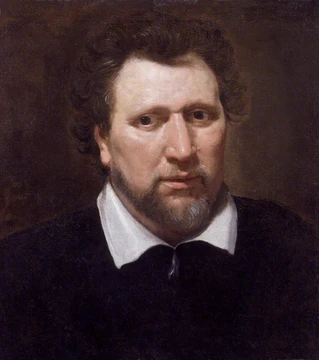
Clifford Odets
American playwright whose 1930s dramas shaped modern theater.

via Wikipedia: Clifford Odets · see source
Clifford Odets (July 18, 1906 – August 14, 1963) was an American playwright, screenwriter, and actor. In the mid-1930s, he was widely seen as the potential successor to Nobel Prize–winning playwright Eugene O'Neill, as O'Neill began to withdraw from Broadway's commercial pressures and increasing critical backlash. From January 1935, Odets's socially relevant dramas were extremely influential, particularly for the remainder of the Great Depression. His works inspired the next several generations of playwrights, including Arthur Miller, Paddy Chayefsky, Neil Simon, and David Mamet.
- born
- July 18, 1906, Philadelphia
- died
- August 14, 1963
- field
- Playwright, screenwriter, actor
- nationality
- American
- known_for
- Socially relevant dramas of the 1930s, including Waiting for Lefty and Awake and
Verified Timeline
Lore & Background
Odets was born in Philadelphia to Louis J. Odets and Pearl Geisinger, Russian- and Romanian-Jewish immigrants, and was raised in Philadelphia and the Bronx, New York. He dropped out of high school after two years to become an actor and a writer. At 19, he billed himself as 'The Rover Reciter,' participating in talent contests and procuring bookings as a radio elocutionist. He appeared in several plays with Harry Kemp's Poet's Theatre on the Lower East Side. Odets was among America's first real disc jockeys at radio station WBNY and others in Manhattan, and also functioned as a drama critic. In the early 1920s, he spent four summers as a dramatics counselor at Jewish camps in the Catskills and the Poconos. His first Broadway break came in 1929 when he was cast in two small roles and as understudy to the young Spencer Tracy in Conflict by Warren F. Lawrence. He landed his first job with the prestigious Theatre Guild in the fall of 1929 as an extra. He became a founding member of the Group Theatre in June 1931 at Brookfield Center in Connecticut. Odets became the first produced Method-trained playwright with his one-act Waiting for Lefty on January 6, 1935, at the former Civic Repertory Theatre on Fourteenth Street in New York City. The play was inspired by the 1934 New York City taxi strike and written in the format of a minstrel show. Its climax—a defiant call for the taxi drivers' union to strike—brought the entire opening night audience to its feet with tumultuous applause. Awake and Sing!, written in 1933 and finally produced by the Group Theatre in February 1935 after Lefty's success, is generally regarded as his masterpiece and has been cited as 'the earliest quintessential Jewish play outside the Yiddish theatre.' Odets became the Group's signature playwright, and his reputation is inextricably connected with the Group Theatre.
Reader's Guide
Clifford Odets's significance lies in his role as a pioneering socially conscious playwright whose works captured the economic and emotional struggles of the Great Depression. His one-act Waiting for Lefty became iconic in the agitprop genre, is widely translated and anthologized, and continues to be popular. Awake and Sing! is cited as the first Broadway play to focus entirely on a Jewish family, distinguished by its in medias res opening, heightened dialogue style, and blatant bias towards the working class. Odets's influence extended to later generations of playwrights including Arthur Miller, Paddy Chayefsky, Neil Simon, and David Mamet. After the production of Clash by Night in the 1941–42 season, he focused primarily on film projects in Hollywood until mid-1948. He returned to New York for five and a half years, producing three more Broadway plays, only one of which was a success. His prominence was eventually eclipsed by Miller, Tennessee Williams, and, in the early- to mid-1950s, William Inge. Odets asserted that all of his plays deal with the human spirit persevering in the face of any opponent, whether or not the characters are depicted as struggling with the capitalist system.
Did You Know?
- Odets was among America's first real disc jockeys at radio station WBNY and others in Manhattan, where he would play records and ad lib commentary.
- He understudied lead actor Luther Adler in the Group's production of John Howard Lawson's Success Story during the 1932–33 season, but Adler never missed a performance.
- Waiting for Lefty was inspired by the 1934 New York City taxi strike and written in the format of a minstrel show.
- Odets's play Rocket to the Moon placed him on the cover of Time in December 1938.
- He credited John Howard Lawson with giving him an understanding of the potential theatrical power of colloquial language.
Frequently Asked Questions
Who is Clifford Odets?
Clifford Odets was an American playwright, screenwriter, and actor born in Philadelphia on July 18, 1906. He is best remembered for his socially charged dramas of the 1930s that addressed the struggles of working-class Americans during the Great Depression.
What are Clifford Odets's most famous plays?
His two signature works are Waiting for Lefty and Awake and Sing!, both produced in the mid-1930s. These socially relevant dramas made him one of the most influential voices on Broadway during the tail end of the Depression.
Why was Clifford Odets seen as Eugene O'Neill's successor?
As O'Neill began pulling back from Broadway's commercial demands and growing critical criticism in the mid-1930s, Odets's fresh, politically engaged plays positioned him as the natural next great American dramatist in the eyes of critics and audiences.
Which playwrights did Clifford Odets influence?
His work left a lasting imprint on several major figures in American theater, including Arthur Miller, Paddy Chayefsky, Neil Simon, and David Mamet. Many of these writers credit his 1930s dramas as a formative influence on their own craft.
When did Clifford Odets die?
Clifford Odets passed away on August 14, 1963, at the age of 57. His career spanned from the socially turbulent 1930s through the early 1960s, during which he also worked as a screenwriter and actor.
More in Playwrights And Dramatists 1-24
Related in Playwrights And Dramatists
Links follow this subject's own source article.
Elsewhere in the Playwrights And Dramatists universe
Spotted an error? Know more?
This is a living reference — every entry is fact-audited, and reader corrections feed straight into our audit queue. Suggest an edit · See this site's audit record