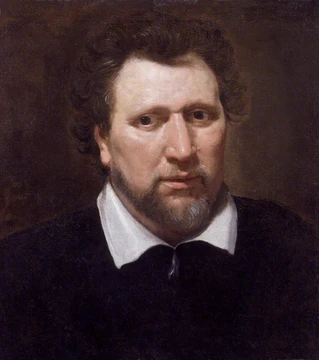
Carlo Gozzi
Venetian playwright who revived Commedia dell'arte through fairy-tale plays.

via Wikipedia: Carlo Gozzi · see source
Carlo, Count Gozzi (13 December 1720 – 4 April 1806) was an Italian (Venetian) playwright and champion of Commedia dell'arte. He came from a family of minor Venetian aristocracy, the Tiepolos, and was born and died in Venice. When his parents could no longer support him, he joined the army in Dalmatia for three years before returning to Venice and joining the Granelleselli Society, which was dedicated to preserving Tuscan literature and handing down traditional Commedia dell'arte. Gozzi is known for his fairy-tale plays, which revived the genre in Italy and influenced later European literature and opera.
- born
- 13 December 1720
- died
- 4 April 1806
- field
- Playwright
- nationality
- Italian (Venetian)
- known_for
- Champion of Commedia dell'arte; author of fairy-tale plays such as The Love for
Lore & Background
Carlo Gozzi defended Commedia dell'arte against the innovations of Pietro Chiari and Carlo Goldoni, who were moving away from the old style of Italian theatre. In 1757 he published a satirical poem, *La tartana degli influssi per l'anno 1756*, and in 1761 his comedy *The Love for Three Oranges* parodied Chiari and Goldoni. He engaged the Sacchi company, a Commedia dell'arte troupe whose engagements had dwindled, and their acting, informed by personal vendetta, made the play an extraordinary success. Gozzi donated the play and his other fairy tales to the troupe, saving the company. His efforts were anachronistic—he wrote out all his scripts, whereas traditional Commedia dell'arte was always improvised. His fairy tales drew influence from Commedia dell'arte and caused a revival of the genre in Italy. They were praised by Goethe, the Schlegel brothers, Hoffmann, Madame de Staël, Sismondi, and Ostrovsky. *Turandot* was translated by Friedrich Schiller and staged by Goethe in Weimar in 1802 with great success. Gozzi was acclaimed throughout most of Europe but less esteemed in his homeland. In his later years he experimented with tragedies with comical influences, which met harsh criticism, then worked in Spanish drama with minor success before his death. He was buried in the church of San Cassiano in Venice.
Reader's Guide
Carlo Gozzi's significance lies in his role as a defender and reviver of Commedia dell'arte during a period when it was being supplanted by more modern, scripted theatre. His fairy-tale plays, though written out rather than improvised, reintroduced fantastical elements and their popularity sparked a revival of Commedia dell'arte in Italy. Gozzi's work had a lasting impact: *Turandot* was adapted by Friedrich Schiller and staged by Goethe, and in the twentieth century inspired treatments by Karl Vollmöller and Bertolt Brecht, and operas by Ferruccio Busoni, Giacomo Puccini, Sergei Prokofiev (*The Love of Three Oranges*), Alfredo Casella (*La donna serpente*), and Hans Werner Henze (*König Hirsch*). His collected works were published under his own superintendence in 1792, in 10 volumes. He shares his tomb with his brother Gasparo Gozzi at the San Michele cemetery on the Isola di San Michele.
Did You Know?
- Gozzi joined the army in Dalmatia for three years after his parents could no longer support him financially.
- His comedy *The Love for Three Oranges* (1761) parodied fellow Venetian writers Pietro Chiari and Carlo Goldoni.
- Gozzi donated his play *The Love for Three Oranges* and his other fairy tales to the Sacchi troupe, saving the company from dwindling engagements.
- Gozzi's *Turandot* was translated by Friedrich Schiller and staged by Goethe in Weimar in 1802.
- He shares his tomb with his brother Gasparo Gozzi at the San Michele cemetery on the Isola di San Michele.
Frequently Asked Questions
Who is Carlo Gozzi?
Carlo Gozzi was a Venetian-born Italian playwright who lived from 1720 to 1806. He is widely regarded as the leading champion of the Commedia dell'arte tradition in eighteenth-century Italy.
What is Carlo Gozzi best known for?
He is most celebrated for his fairy-tale stage plays, which brought back the old improvised-comedy style of Commedia dell'arte to the Venetian theater. His work helped reinvigorate a theatrical form that had been fading across Italy.
What are Carlo Gozzi's most famous plays?
Two of his best-recognized works are The Love for Three Oranges and Turandot. Both are fairy-tale dramas that showcase his signature blend of comic stock characters and fantastical plots.
How did Carlo Gozzi influence later European theater and literature?
His fairy-tale plays left a lasting mark on subsequent European drama, poetry, and opera. Composers and writers in the following centuries drew on his plots and character types for their own stage and musical works.
When was Carlo Gozzi born and when did he die?
He was born on 13 December 1720 in Venice and passed away on 4 April 1806. His long life spanned the height and decline of the Commedia dell'arte era.
More in Playwrights And Dramatists 1-24
Elsewhere in the Playwrights And Dramatists universe
Spotted an error? Know more?
This is a living reference — every entry is fact-audited, and reader corrections feed straight into our audit queue. Suggest an edit · See this site's audit record