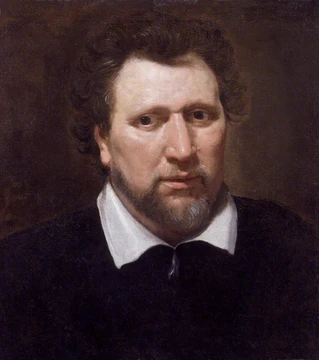
Christopher Fry
English poet and playwright known for verse dramas.

Christopher Fry (born Arthur Hammond Harris; 18 December 1907 – 30 June 2005) was an English poet and playwright. He is best known for his verse dramas, especially The Lady's Not for Burning (1948), which made him a major force in theatre in the 1940s and 1950s.
- born
- 18 December 1907
- died
- 30 June 2005
- field
- Poet and playwright
- nationality
- English
- known_for
- Verse dramas, especially The Lady's Not for Burning
Verified Timeline
Lore & Background
Christopher Fry was born as Arthur Hammond Harris in Bristol, the son of Charles John Harris, a master builder who retired early to work full-time as a licensed Lay Reader in the Church of England, and his wife Emma Marguerite Fry Hammond Harris. While still young, he took his mother's maiden name because, on very tenuous grounds, he believed her to be related to the 19th-century Quaker prison reformer Elizabeth Fry. He adopted Elizabeth Fry's faith, and became a Quaker. After attending Bedford Modern School, where he wrote amateur plays, he became a schoolteacher, working at the Bedford Froebel Kindergarten and Hazelwood School in Limpsfield, Surrey. In the 1920s, he met the writer Robert Gittings, who became a lifelong friend. Fry gave up his school career in 1932 to found the Tunbridge Wells Repertory Players, which he ran for three years, directing and starring in the English premiere of George Bernard Shaw's A Village Wooing in 1934. As a curtain-raiser, he put on a revised version of a show he wrote when he was a schoolboy called The Peregrines. He also wrote the music for She Shall Have Music in 1935. His play about Thomas John Barnardo toured in a fund-raising amateur production in 1935 and 1936, including Deborah Kerr in its cast. His professional career began to take off in 1938, when he was commissioned by the vicar of Steyning, West Sussex, to write a play celebrating the local saint, Cuthman of Steyning. This became The Boy With A Cart. It would be put on professionally in 1950 at the Lyric, Hammersmith, with John Gielgud directing and the young Richard Burton in his first starring role. Tewkesbury Abbey commissioned his next play, The Tower, written in 1939, which was seen by the poet T. S. Eliot, who became a friend and is often cited as an influence. In 1939 Fry also became artistic director of Oxford Playhouse. A pacifist, he was a conscientious objector during World War II, and served in the Non-Combatant Corps; for part of the time he cleaned London's sewers. After the War, he wrote a comedy, A Phoenix Too Frequent, which was produced at the Mercury Theatre, Notting Hill Gate, and revived at the Arts Theatre London, in 1946, starring Paul Scofield, Hermione Hannen, and Joan White. The Firstborn was produced at the Oxford Playhouse in 1948, featuring two songs specially written for the play by Leonard Bernstein. In 1948, Fry wrote a commission for the Canterbury Festival, Thor, With Angels. He was then commissioned to write a play by Alec Clunes, manager of the Arts Theatre in London. The result, The Lady's Not for Burning, was first performed there in 1948, directed by the actor Jack Hawkins. Due to its success, it transferred to the West End for a nine-month run, starring John Gielgud and featuring Richard Burton and Claire Bloom among the cast. It was presented on Broadway in 1950, again with Burton. The play marked a revival in popularity for poetic drama, most notably espoused by T. S. Eliot. It is the most performed of all his plays and inspired British Prime Minister Margaret Thatcher to declaim, 'You turn if you want to — the lady's not for turning,' at the Conservative Party conference in 1980.
Reader's Guide
Christopher Fry's significance lies in his revival of poetic drama in the mid-20th century, particularly through his verse play The Lady's Not for Burning (1948), which became his most performed work and a major force in theatre in the 1940s and 1950s. His style, influenced by T. S. Eliot, marked a revival in popularity for poetic drama. However, his poetic style began to fall out of fashion with the advent of the Angry Young Men of British theatre in the mid-1950s. Despite this, Fry continued to write plays, translations, and film scripts, including uncredited work on Ben-Hur (1959). His legacy includes a quartet of 'seasonal' plays—The Lady's Not for Burning (spring), Venus Observed (autumn), The Dark is Light Enough (winter), and A Yard of Sun (summer)—completed in 1970. Revivals of his plays include a staged reading of The Lady's Not For Burning at the National Theatre in 2001 as one of the 100 best plays of the 20th century, with actors Alex Jennings, Prunella Scales and Samuel West. West went on to produce The Lady's Not For Burning at Chichester Festival Theatre's Minerva Theatre in 2002 with Nancy Carroll, Alan Cox and Benjamin Whitrow. In 2007, it was performed in a new production at the Finborough Theatre, London. Ring Round The Moon was revived at the Theatre Royal Haymarket 1967-68, starring John Standing and Angela Thorne. In 2008, it was revived again, directed by Sean Mathias, once again starring Angela Thorne. Bedford Modern School named the new Junior School hall after him in commemoration of his achievements.
Did You Know?
- Fry was born Arthur Hammond Harris but took his mother's maiden name because he believed, on very tenuous grounds, she was related to Quaker prison reformer Elizabeth Fry.
- During World War II, Fry was a conscientious objector and served in the Non-Combatant Corps, where for part of the time he cleaned London's sewers.
- The Lady's Not for Burning inspired British Prime Minister Margaret Thatcher to declaim, 'You turn if you want to — the lady's not for turning,' at the Conservative Party conference in 1980.
- Fry's play The Firstborn featured two songs specially written by Leonard Bernstein.
- Fry was uncredited for his work on the screenplay of Ben-Hur (1959); the sole writing credit went to Karl Tunberg.
Frequently Asked Questions
Who is Christopher Fry?
Christopher Fry was an English poet and dramatist who specialized in writing plays in verse form. He was born Arthur Hammond Harris on 18 December 1907 and died on 30 June 2005.
What is Christopher Fry's most famous play?
His most celebrated work is The Lady's Not for Burning, a verse drama first staged in 1948. That production is what cemented his reputation as a leading figure in mid-century British theatre.
What was Christopher Fry's real birth name?
He was actually born Arthur Hammond Harris, though he adopted the stage name Christopher Fry for his entire professional career as a poet and playwright.
During which era was Christopher Fry most prominent?
He rose to become a major force in the theatre scene during the 1940s and 1950s, a period when his verse dramas received significant critical and audience attention.
Why is Christopher Fry considered important in playwriting?
He helped revitalize the use of poetic language on the modern stage at a time when prose drama had become the norm. His verse dramas, especially The Lady's Not for Burning, demonstrated that poetic form could still thrive in contemporary theatre.
More in Playwrights And Dramatists 1-24
Elsewhere in the Playwrights And Dramatists universe
Spotted an error? Know more?
This is a living reference — every entry is fact-audited, and reader corrections feed straight into our audit queue. Suggest an edit · See this site's audit record