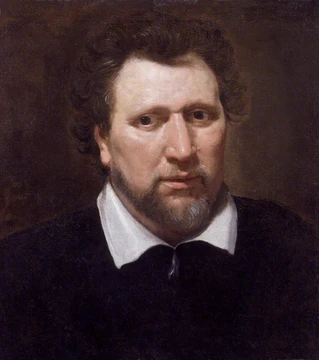
Dario Fo
Italian playwright and Nobel laureate known for political satire.

via Wikipedia: Dario Fo · see source
Dario Luigi Angelo Fo was an Italian playwright, actor, theatre director, stage designer, songwriter, and political campaigner for the Italian left wing. He received the 1997 Nobel Prize in Literature and was considered arguably the most widely performed contemporary playwright in world theatre. His dramatic work often depended on improvisation and recovered 'illegitimate' forms of theatre, such as medieval strolling players and commedia dell'arte.
- born
- 24 March 1926
- died
- 13 October 2016
- field
- Playwright, actor, theatre director, stage designer, songwriter, political campa
- nationality
- Italian
- known_for
- Recipient of the 1997 Nobel Prize in Literature; widely performed contemporary p
Verified Timeline
Lore & Background
Fo was born at Sangiano, in Lombardy's Province of Varese, near Lake Maggiore. His father was a station master and socialist who acted in amateur theatre; his mother wrote a book of reminiscences. Fo learned storytelling from his maternal grandfather and local fishers and glassblowers. During World War II, he was drafted into Mussolini's fascist army but later claimed he helped his father smuggle refugees and Allied soldiers to Switzerland. His statements about wartime activities were denied by partisans and fascist comrades, and a 1979 court sentence contradicted his account. After the war, he studied at the Brera Academy and Politecnico di Milano but left before final examinations, then became involved in small theatres and improvised monologues. In the 1950s, Fo began collaborating with Franco Parenti on variety shows, and in 1951 performed a controversial radio series that was cancelled. He co-wrote and performed in revues, and in 1953 began songwriting with Fiorenzo Carpi. He married Franca Rame in 1954; they had a son, Jacopo. Fo's work of the 1960s–1980s criticized assassinations, corruption, organized crime, racism, Roman Catholic theology, and war. In the 1990s–2000s, he lampooned Forza Italia and Silvio Berlusconi; in the 2010s, he targeted banks during the European sovereign-debt crisis and became the main ideologue of the Five Star Movement.
Reader's Guide
Dario Fo's significance lies in his fusion of political satire with traditional Italian performance forms, particularly commedia dell'arte and medieval giullari. His plays, translated into 30 languages and performed worldwide, often used improvisation to critique authority. His solo work Mistero Buffo, performed over 30 years across multiple continents, was denounced by a cardinal as blasphemous. The title of his play Can't Pay? Won't Pay? entered the English language. The 1997 Nobel Prize in Literature recognized him as a major figure in 20th-century world theatre, with the Swedish Academy praising his emulation of medieval jesters in scourging authority and upholding the dignity of the downtrodden. Fo owned and operated a theatre company and was an atheist. His legacy includes influencing the anti-establishment Five Star Movement and maintaining a controversial, politically engaged theatrical tradition.
Did You Know?
- Fo's radio series Poer nano was cancelled after scandalised authorities objected to his adult fairy tales, including a version of Hamlet where the title character kills his father to continue an affair with his mother.
- The Swedish Academy praised Fo as a writer 'who emulates the jesters of the Middle Ages in scourging authority and upholding the dignity of the downtrodden.'
- Fo's solo piece Mistero Buffo was denounced by Cardinal Ugo Poletti as 'the most blasphemous show in the history of television.'
- Fo's father, a socialist station master, is thought to have helped smuggle Jewish scientists to safety in Switzerland during World War II.
- Fo's play Can't Pay? Won't Pay? has a title that passed into the English language, and the play is described as capturing 'something universal in actions and reactions of the working class.'
Frequently Asked Questions
Who is Dario Fo?
Dario Luigi Angelo Fo (1926–2016) was an Italian theatre personality who worked as a playwright, actor, director, set designer, songwriter, and left-wing political activist. He is widely regarded as the most frequently staged living dramatist of the twentieth century.
What is Dario Fo's theatrical style?
His productions leaned on live improvisation and deliberately resurrected older, 'unofficial' performance traditions such as medieval wandering troupes and the masked stock characters of commedia dell'arte. Rather than treating the script as a fixed text, he treated it as a springboard for spontaneous, audience-reactive comedy.
Why did Dario Fo receive the Nobel Prize in Literature?
The Swedish Academy honored him in 1997 for his body of politically charged satire and his inventive fusion of popular stage forms with sharp social commentary. His work gave a theatrical voice to working-class perspectives and consistently mocked institutional power.
What are Dario Fo's birth and death dates?
He was born on 24 March 1926 in Italy and died on 13 October 2016. His creative and political career spanned nearly the entire latter half of the twentieth century.
Why is Dario Fo considered important in world theatre?
He demonstrated that a playwright could be simultaneously a political campaigner, a hands-on performer, and a designer, collapsing the traditional boundaries between backstage and onstage roles. His model of theatre as accessible, improvised, and politically urgent influenced a generation of experimental and activist companies worldwide.
More in Playwrights And Dramatists 1-24
Elsewhere in the Playwrights And Dramatists universe
Spotted an error? Know more?
This is a living reference — every entry is fact-audited, and reader corrections feed straight into our audit queue. Suggest an edit · See this site's audit record