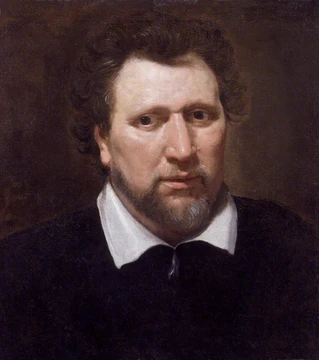
Nicholas Rowe (writer)
English dramatist, poet, and first editor of Shakespeare.
Nicholas Rowe (20 June 1674 – 6 December 1718) was an English playwright, poet, and author of various works. He became Poet Laureate in 1715. His writing was popular in his own time, and one of his translations was hailed as a major achievement in English poetry. He is also recognized as the first person to edit the collected works of William Shakespeare.
Rowe was born in Little Barford, Bedfordshire, to John Rowe, a barrister and sergeant-at-law, and Elizabeth Edwards. His family owned a substantial estate in Lamerton, Devon. His father practiced law and published legal reports during the reign of James II. Rowe first attended Highgate School, then Westminster School under Richard Busby. In 1688 he became a King’s Scholar, and in 1691 he entered Middle Temple, as his father decided he was ready to study law. At Middle Temple, he approached law not as a set of precedents but as a system of rational governance and justice. When his father died, Rowe was nineteen and inherited an independent fortune. He abandoned law to focus first on poetry, then on plays.
From 1709 to 1711, Rowe served as under-secretary to the Duke of Queensberry, then principal secretary of state for Scotland. When George I came to the throne, Rowe was appointed a surveyor of customs. In 1715 he succeeded Nahum Tate as poet laureate. He also became clerk of the council to the Prince of Wales, and in 1718 Lord Chancellor Parker nominated him clerk of the presentations in Chancery. Rowe died on 6 December 1718 and was buried in Westminster Abbey. Around 1722, John Michael Rysbrack erected a monument to him there. The tomb inscription commemorates Rowe and his only daughter, Charlotte, who died in 1739 at age twenty-two. After his death, his widow received a pension from George I in 1719, acknowledging his translation of Lucan’s *Pharsalia*. Samuel Johnson called this verse translation one of the greatest productions in English poetry; it went through eight editions between 1718 and 1807.
Rowe married Antonia Parsons in 1695. They had a son, John, born in 1699, who later married Mary Hambly Rowe and had eight children. Antonia died in 1706. Rowe married again in 1717, to Anne Devenish, and they had a daughter, Charlotte, who died in 1739 leaving two children.
Rowe’s first play, *The Ambitious Stepmother*, was produced in 1700 at Lincoln’s Inn Fields by Thomas Betterton and set in Persepolis; it was well received. In 1701 came *Tamerlane*, where the conqueror Timur represented William III and Louis XIV was denounced as Bajazet. This play was performed annually on the anniversary of William’s landing at Torbay. In Dublin in 1712, political tensions caused a serious riot during a performance. *The Fair Penitent* (1702, published 1703) adapted Massinger and Field’s *The Fatal Dowry*. Johnson called it one of the most pleasing tragedies in English. Its character Lothario became synonymous with a rake, and Calista is thought to have inspired Samuel Richardson’s Clarissa Harlowe. Johnson praised the play’s domestic story and harmonious diction. Rowe attempted comedy in 1704 with *The Biter* at Lincoln’s Inn Fields, but it failed. He returned to tragedy with *Ulysses* (1705), which Johnson felt suffered because audiences were too familiar with mythological heroes. *The Royal Convert* (1707) told of a love triangle between two brothers, Hengist and Aribert, and a Christian woman, Ethelinda, who is martyred. *Jane Shore* (1714), an imitation of Shakespeare’s style, starred Anne Oldfield at Drury Lane, ran for nineteen nights, and remained Rowe’s longest-lasting stage work. It focused on domestic scenes and private distress, with a forgiving husband and a repentant wife. *The Tragedy of Lady Jane Grey* followed in 1715.
- field
- Dramatist, poet, miscellaneous writer
- nationality
- English
Lore & Background
Nicholas Rowe was born in Little Barford, Bedfordshire, England, son of John Rowe, barrister and sergeant-at-law, and Elizabeth, daughter of Jasper Edwards, on 20 June 1674. His family possessed a considerable estate at Lamerton in Devonshire. His father practised law and published Benlow's and Dallison's Reports during the reign of King James II. The future Poet Laureate was educated first at Highgate School, and then at Westminster School under the guidance of Richard Busby. In 1688, Rowe became a King's Scholar, which was followed by his entrance into Middle Temple in 1691. On his father's death, when he was nineteen, he became the master of an independent fortune. He was left to his own direction, and from that time ignored law to try his hand first at poetry, and then later at writing plays. Rowe acted as under-secretary (1709–1711) to the Duke of Queensberry when he was principal secretary of state for Scotland. On the accession of George I, Rowe was made a surveyor of customs, and in 1715 he succeeded Nahum Tate as poet laureate. He was also appointed clerk of the council to the Prince of Wales, and in 1718 was nominated by Lord Chancellor Parker as clerk of the presentations in Chancery. He died on 6 December 1718, and was buried in Westminster Abbey. A monument was erected to his memory in the Abbey by John Michael Rysbrack c. 1722.
Reader's Guide
Nicholas Rowe's significance rests on three main achievements: his influential edition of Shakespeare's works, his popular tragedies, and his verse translation of Lucan. Though he based his text on the corrupt Fourth Folio, his edition set a standard for scholarly presentation. His plays, particularly The Fair Penitent and Jane Shore, were praised by Samuel Johnson and remained in the repertory for decades. The character Lothario from The Fair Penitent became a byword for a rake, and the play influenced Samuel Richardson's Clarissa. His widow received a pension from George I in 1719 in recognition of her husband's translation of Lucan. Though his own works are now seldom performed, his editorial legacy and his role in shaping 18th-century taste for Shakespeare and neoclassical tragedy remain notable.
Did You Know?
- Rowe succeeded Nahum Tate as Poet Laureate in 1715.
- His verse translation of Lucan's Pharsalia was called by Samuel Johnson 'one of the greatest productions in English poetry' and ran through eight editions between 1718 and 1807.
- Rowe's play Tamerlane represented William III as Timur and denounced Louis XIV as Bajazet, and was regularly acted on the anniversary of William's landing at Torbay.
- The character Lothario from Rowe's The Fair Penitent became synonymous with a rake.
- Rowe's 1709–10 edition of Shakespeare was the first to be illustrated, with a frontispiece engraving for each play.
The Prolific Stage Career
Rowe's first play, The Ambitious Stepmother, was produced in 1700 at Lincoln's Inn Fields by Thomas Betterton and set in Persepolis, and was well received. This was followed in 1701 by Tamerlane, in which the conqueror Timur represented William III, and Louis XIV is denounced as Bajazet. It was for many years regularly acted on the anniversary of William's landing at Torbay. In Dublin in 1712, at a time when political passions were running high, the performance provoked a serious riot. The Fair Penitent (1702, published 1703), an adaptation of Massinger and Field's The Fatal Dowry, was pronounced by Samuel Johnson as one of the most pleasing tragedies ever written in English. It featured the character of Lothario, whose name became synonymous with a rake. Calista is said to have suggested to Samuel Richardson the character of Clarissa Harlowe, as Lothario suggested Lovelace. In 1704, Rowe tried his hand at comedy, producing The Biter at Lincoln's Inn Fields, which was unsuccessful. He returned to tragedy in Ulysses (1705). The Royal Convert (1707) was a story about a love triangle between two brothers, Hengist and Aribert, and a Christian woman named Ethelinda, who is martyred. Jane Shore, professedly an imitation of Shakespeare's style, was played at Drury Lane with Anne Oldfield in the title role in 1714. It ran for nineteen nights, and kept the stage longer than any other of Rowe's works. The Tragedy of Lady Jane Grey followed in 1715, and as this play was not successful, it was his last foray into the medium.
Shakespeare's First Modern Editor
Rowe published the first 18th-century edition of William Shakespeare in seven volumes (six volumes of plays and a seventh of poems) in 1709–10 (printed by Tonson) and is also considered the first editor of Shakespeare. His practical knowledge of the stage helped him divide the plays into scenes (and sometime acts), with the entrances and exits of the players noted. He also normalised the spelling of names and prefixed each play with a list of the dramatis personae. This 1709–10 edition was also the first to be illustrated, a frontispiece engraving being provided for each play. Unfortunately, Rowe based his text on the corrupt Fourth Folio, a course which was followed by many later 18th-century editors who followed in his editorial footsteps. Rowe also wrote a short biography of Shakespeare, entitled, Some Account of the Life &c. of Mr. William Shakespear.
A Life of Fortune, Loss, and Literary Devotion
Rowe was first married to Antonia Parsons in 1695 with whom he had a son John, born in 1699. John married Mary Hambly Rowe, with whom he had eight children. Antonia died in 1706. Rowe married again in 1717. His second wife was Anne Devenish, and they had a daughter named Charlotte. Charlotte died in 1739, leaving two children. Upon his death his widow received a pension from George I in 1719 in recognition of her husband's translation of Lucan. This verse translation, or rather paraphrase of the Pharsalia, was called by Samuel Johnson one of the greatest productions in English poetry, and was widely read, running through eight editions between 1718 and 1807.
Public Service and Lasting Memorial
Rowe acted as under-secretary (1709–1711) to the Duke of Queensberry when he was principal secretary of state for Scotland. On the accession of George I, Rowe was made a surveyor of customs, and in 1715 he succeeded Nahum Tate as poet laureate. He was also appointed clerk of the council to the Prince of Wales, and in 1718 was nominated by Lord Chancellor Parker as clerk of the presentations in Chancery. He died on 6 December 1718, and was buried in Westminster Abbey. A monument was erected to his memory in the Abbey by John Michael Rysbrack c. 1722. The inscription on his tomb reads: 'Thy Reliques, Rowe, to this sad Shrine we trust, and near thy Shakespear place thy honour'd Bust, Oh next him skill'ed to draw the tender Tear, For never Heart felt Passion more sincere: To nobler sentiment to fire the Brave. For never Briton more disdain'd a Slave: Peace to the gentle Shade, and endless Rest, Blest in thy Genius, in thy love too blest; And blest, that timely from Our Scene remov'd Thy Soul enjoys that Liberty it lov'd.'
Frequently Asked Questions
What is Nicholas Rowe (writer) best known for?
He is most celebrated for his tragedies, his verse rendering of Lucan's Pharsalia, and for compiling the first modern collected edition of Shakespeare's plays. That Shakespeare edition in particular established a framework for how the Bard's works would be published for centuries.
More in Playwrights And Dramatists 1-24
Spotted an error? Know more?
This is a living reference — every entry is fact-audited, and reader corrections feed straight into our audit queue. Suggest an edit · See this site's audit record