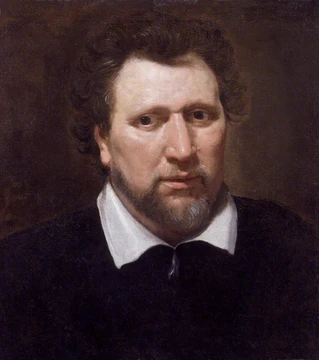
Plautus
Roman playwright of the Old Latin period; earliest surviving Latin comedies.
Titus Maccius Plautus ( PLAW-təs; c. 254 – 184 BC) was a Roman playwright active during the Old Latin period. His comedies are the oldest complete Latin literary works still in existence. He wrote in the genre of Palliata comoedia, which was first created by Livius Andronicus, a key figure in early Latin literature. The term "Plautine" (PLAW-tyne) describes both Plautus's own plays and works that resemble or were inspired by his.
Little is known about his early life. He was likely born around 254 BC in Sarsina, a small town in what is now Emilia-Romagna, northern Italy, then part of the larger ancient region of Umbria. According to scholar Morris Marples, Plautus began his career as a stage-carpenter or scene-shifter, which may have sparked his love for theater. His acting talent was later noticed, and he took the name "Maccius" (from Maccus, a clownish character in Atellan Farce) and the agnomen "Plautus" (meaning "trampled flat," often referring to flat feet or flat ears like a hound's). Tradition says he earned enough to go into the shipping business, but it failed. He then worked as a manual laborer and studied Greek drama, especially the New Comedy of Menander, in his spare time. This study enabled him to write his plays, which were produced between about 205 and 184 BC. He became so popular that his name alone was a mark of theatrical success.
His comedies are mostly adapted from Greek originals for Roman audiences, often directly based on works by Greek playwrights. He reworked these texts to suit local Roman tastes. They are the earliest complete surviving works in Latin literature.
Plautus's epitaph read:
postquam est mortem aptus Plautus, Comoedia luget, scaena deserta, dein risus, ludus iocusque et numeri innumeri simul omnes conlacrimarunt.
Since Plautus is dead, Comedy mourns, The stage is deserted; then Laughter, Jest and Wit, And all Melody's countless numbers wept together.
**Surviving plays**
**Amphitruo** (a large segment near the end is missing) Set in Thebes, Greece. While the general Amphitruo is at war, the god Jupiter visits his house and sleeps with his wife Alcumena, disguised as her husband. Jupiter's son Mercury, disguised as the slave Sosia, stands guard. When the real Sosia returns with news of victory, Mercury teases and beats him. When Amphitruo arrives, Alcumena is surprised to see him back so soon. A quarrel ensues, and Amphitruo accuses her of adultery. He leaves to find a witness. Jupiter returns for another encounter with Alcumena. When Amphitruo returns, Mercury, still disguised as Sosia, climbs onto the roof and pelts him with tiles. (A gap in the manuscripts follows.) Enraged, Amphitruo is about to storm the house and kill everyone when a thunderclap sounds. A nurse reports that Alcumena has miraculously given birth to twin boys (one is Hercules). Finally, Jupiter appears and explains everything to Amphitruo.
**Asinaria** ("The Comedy of Asses") Demaenetus, an Athenian gentleman, tells his slave Libanus that his son Argyrippus loves a prostitute, Philaenium, but lacks money to pay for her. He asks Libanus to cheat his wealthy wife Artemona or her steward Saurea to get the money. Libanus is stuck until his fellow slave Leonida meets a stranger who has come to pay a debt to Saurea for some donkeys sold to a merchant. Leonida pretends to be Saurea, and he and Libanus trick the stranger into handing over the money. The money goes to Argyrippus, but with the condition that his father gets the first night with Philaenium. A jealous rival, Diabolus, who arrives too late with his own money, hires a parasite to inform Artemona. She storms the brothel in a fury and drags her husband away in embarrassment, leaving Argyrippus to enjoy Philaenium alone.
**Aulularia** ("The Pot of Gold") (ending missing) The miserly Euclio finds a pot of gold in his house and constantly checks that it is safe. His wealthy neighbor Megadorus asks to marry Euclio's daughter Phaedrium, unaware that she was raped earlier and is heavily pregnant. Megadorus's slave Strobilus arrives with two hired cooks to prepare a wedding feast, sending one cook, Congrio, to Euclio's house. Euclio returns, panics that his gold is being stolen, and chases Congrio into the street. He hides the pot in a temple, then in a grove outside the city, but is spied on each time by a slave of Megadorus's nephew Lyconides. Euclio is horrified to find his gold stolen despite his precautions. Lyconides then confesses to Euclio that he raped Phaedrium and wants to marry her. Later, Lyconides learns that his own slave stole the gold and insists it be returned. (The manuscript breaks off; from an ancient summary, Lyconides returned the gold, Euclio consented to the marriage, and gave the gold as a dowry.)
**Bacchides** ("The Bacchis Sisters") (The first few scenes are missing.) The young man Mnesilochus is in love with a courtesan named Bacchis. While he is abroad, his friend Pistoclerus falls in love with Bacchis's twin sister, also called Bacchis.
- field
- Playwright
- nationality
- Roman
- known_for
- Earliest surviving intact Latin comedies; influence on Shakespeare and Molière
Lore & Background
Not much is known about Plautus's early life. According to Morris Marples, Plautus worked as a stage-carpenter or scene-shifter in his early years. It is from this work, perhaps, that his love of the theater originated. His acting talent was eventually discovered; and he adopted the nomen 'Maccius' (from Maccus, a clownish stock character in Atellan Farce) and agnomen 'Plautus' ('trampled flat', usually in reference to 'flat-footed' but sometimes intending 'flat-eared' like the ears of a hound). Tradition holds that he made enough money to go into the nautical business, but that the venture collapsed. He is then said to have worked as a manual laborer and to have studied Greek drama—particularly the New Comedy of Menander—in his leisure. His studies allowed him to write his plays, which were released between c. Plautus attained such popularity that his name alone became a hallmark of theatrical success.
Reader's Guide
Plautus's comedies are mostly adapted from Greek models for a Roman audience, and are often based directly on the works of the Greek playwrights. He reworked the Greek texts to give them a flavour that would appeal to the local Roman audiences. They are the earliest surviving intact works in Latin literature. His influence extended to some of the greatest figures in literature, including Shakespeare and Molière (The Miser is partly modeled after Plautus's Aulularia). The word 'Plautine' refers to both Plautus's own works and works similar to or influenced by his. Surviving plays include Amphitruo, Asinaria, Aulularia, Bacchides, Captivi, and Casina, among others. These works feature stock characters, mistaken identities, and clever slaves, and they often involve love, money, and family conflicts. Plautus's epitaph, recorded in the source, reads: 'Since Plautus is dead, Comedy mourns, / The stage is deserted; then Laughter, Jest and Wit, / And all Melody's countless numbers wept together.'
Did You Know?
- Plautus's comedies are the earliest Latin literary works to have survived in their entirety.
- He adopted the nomen 'Maccius' from Maccus, a clownish stock character in Atellan Farce.
- His play Aulularia partly inspired Molière's The Miser.
- Plautus's epitaph states that Comedy mourns his death.
From Stage-Carpenter to Theatrical Icon
Plautus's path to literary immortality was anything but straightforward. According to the scholar Morris Marples, the young Plautus labored as a stage-carpenter or scene-shifter, a hands-on role that likely planted the seeds of his lifelong passion for performance. His natural acting gifts were eventually noticed, and he stepped onto the boards himself, adopting the theatrical surname "Maccius" after Maccus, a clownish figure from Atellan Farce, and the nickname "Plautus," a word meaning "trampled flat" that could describe either a flat foot or the broad ears of a hound. Tradition recounts that he briefly profited from a nautical enterprise before it collapsed, leaving him to earn a living through manual labor. It was during this period of physical toil that he devoted his spare hours to studying Greek drama, particularly the New Comedy of Menander. His popularity grew so immense that bearing his name became a guarantee of box-office success.
Adapting Greek Comedy for Roman Stages
Plautus worked within the Palliata comoedia, a comedic genre originally established by Livius Andronicus, the figure credited with pioneering Latin literature. His method was fundamentally one of creative translation: he took existing Greek plays, many drawn from the New Comedy tradition associated with Menander, and reshaped them to resonate with Roman sensibilities. Rather than producing literal translations, he reworked the material to inject a distinctly local flavor that would thrill audiences in the Forum. The result was a body of comedy that stands as the earliest Latin literary works preserved in their complete form. Among the surviving titles are Amphitruo, in which Jupiter impersonates a general to seduce his wife while Mercury, disguised as a slave, pelts the real husband with roof tiles; Asinaria, a scheme-driven comedy of a young man's pursuit of a courtesan and the elaborate deceptions his slaves orchestrate; Aulularia, the story of a miser who hides a pot of gold and obsessively guards it; and Bacchides, a tale of twin courtesans and a clever slave's financial manipulation. Each play is a masterclass in layered disguise, mistaken identity, and the comic collision of social classes.
A Lasting Shadow Over Western Comedy
Few ancient writers have cast such a long and visible shadow over the history of European theater. Plautus's influence reaches directly into the works of Shakespeare and Molière, two of the most celebrated dramatists in the Western canon. Molière's The Miser, for instance, is partly modeled on Plautus's Aulularia, demonstrating how the Roman playwright's treatment of obsessive avarice and domestic farce continued to inspire new generations of comic writers more than two millennia later. The adjective "Plautine" entered the literary vocabulary to describe not only the playwright's own output but any work that echoes his structural patterns, his stock characters, or his particular brand of physical and verbal humor. Because his comedies are the oldest Latin literary texts to survive intact, they also serve as a foundational reference point for scholars tracing the development of Roman literature. His name itself became a commercial brand in the ancient world, a shorthand for theatrical quality that audiences recognized instantly. In this way, Plautus occupies a unique position: he is simultaneously a creator, a standard-bearer, and a touchstone against which later comedy is measured.
The Man Behind the Mask
Beyond his plays, the personal details of Plautus's life remain fragmentary and often legendary. Between those two dates, tradition paints a picture of a man who rose from the workshop floor, tasted brief commercial success in a seafaring venture, lost everything when that venture failed, and then rebuilt his life through the slow, deliberate study of Greek dramatic texts during his hours of manual labor. His chosen stage name, "Plautus," carries a vivid physical image—something trampled flat, perhaps a broad foot or the wide ears of a hound—suggesting a man who saw humor in the body's imperfections. His epitaph, preserved in the manuscripts, personifies Comedy, Laughter, Jest, Wit, and Melody as mourners gathered at his grave, a testament to how deeply his art was woven into the cultural fabric of Rome. It is a small, poetic coda to a life that was, by all accounts, anything but smooth.
Frequently Asked Questions
What kind of plays did Plautus write?
He composed palliata comoedia, a comic genre first established by Livius Andronicus, the pioneer who adapted Greek drama into Latin. His works are fast-paced, character-driven comedies that set the template for Roman stage humor.
Why do fans and scholars consider Plautus important?
Because his intact comedies are the oldest surviving examples of Latin literature, he anchors the entire Western dramatic tradition. Both Shakespeare and Molière later adapted or echoed his plots and stock characters in their own comedies.
What does the term "Plautine" actually mean?
The word applies to Plautus's own surviving plays as well as to any later work that imitates his style, structure, or comedic conventions. It functions as a shorthand for a particular flavor of ancient Roman comedy.
Where does Plautus sit in the timeline of Roman literature?
He belongs to the Old Latin period, writing after Livius Andronicus had first brought Greek dramatic forms into the Latin language. His comedies therefore occupy the very foundation of the Roman literary tradition that later produced Terence, Seneca, and beyond.
More in Playwrights And Dramatists 1-24
Spotted an error? Know more?
This is a living reference — every entry is fact-audited, and reader corrections feed straight into our audit queue. Suggest an edit · See this site's audit record