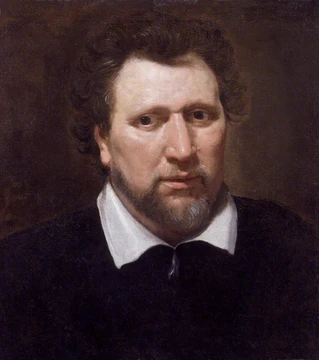
Robert E. Sherwood
American playwright and screenwriter, winner of multiple Pulitzer Prizes and an Academy Award.
Robert Emmet Sherwood (April 4, 1896 – November 14, 1955) wrote plays and screenplays. His credits include *Waterloo Bridge*, *Idiot's Delight*, *Abe Lincoln in Illinois*, *There Shall Be No Night*, and *The Best Years of Our Lives*, and he worked on the screen adaptations of *Rebecca* and *The Bishop's Wife*. He won the Pulitzer Prize for Drama three times (1936, 1939, 1941), an Academy Award for Best Adapted Screenplay (1947), and a Pulitzer Prize for Biography (1949).
Sherwood was born in New Rochelle, New York, to Arthur Murray Sherwood, a wealthy stockbroker who helped start *The Harvard Lampoon*, and Rosina Emmet Sherwood, a noted illustrator and portrait painter. His paternal grandmother, Mary Elizabeth Wilson Sherwood, was an author and social figure. He was a great-great-grandson of New York State Attorney General Thomas Addis Emmet and a great-grandnephew of Irish nationalist Robert Emmet, executed for treason after the 1803 rebellion. His aunts Lydia Field Emmet and Jane Emmet de Glehn, and his first cousin once removed Ellen Emmet Rand, were all notable portrait artists.
He attended Fay School, Milton Academy, and Harvard University from 1914 to 1917. He left Harvard to join the 42nd Battalion of the Canadian Expeditionary Force after the U.S. Army rejected him for being too tall. In France during World War I, he was gassed and wounded twice. After returning home, he became a movie critic for magazines like *Life* and *Vanity Fair*. His critical work in the 1920s is covered in the 2009 documentary *For the Love of Movies: The Story of American Film Criticism*, where *Time* critic Richard Schickel notes Sherwood was the first New York critic invited to Hollywood by train to meet stars and directors.
Sherwood was an original member of the Algonquin Round Table, close friends with Dorothy Parker and Robert Benchley, who worked with him at *Vanity Fair* when the group began meeting in 1919. Author Edna Ferber was also a close friend. In 1920, he became editor of *Life*.
His first Broadway play, *The Road to Rome* (1927), a comedy about Hannibal’s failed invasion of Rome, introduced a recurring theme: the futility of war. Many later works, including *Idiot's Delight* (1936), which won his first Pulitzer, played with this idea. He once told gossip columnist Lucius Beebe, “The trouble with me is that I start with a big message and end up with nothing but good entertainment.” He served as president of the Dramatists Guild of America from 1937 to 1939.
Hollywood took notice of his Broadway success, and he began writing for film in 1926. Some work went uncredited, but his films often adapted his own plays. He co-wrote the screenplay for *Rebecca* (1940) with Alfred Hitchcock and Joan Harrison. During World War II, he set aside his anti-war views to support the fight against the Third Reich. His 1940 play *There Shall Be No Night*, about the Soviet invasion of Finland, was produced by the Playwright’s Company he co-founded and starred Alfred Lunt, Lynn Fontanne, and Montgomery Clift; Katharine Cornell produced and starred in a 1957 TV adaptation. Sherwood publicly called isolationist Charles Lindbergh a "Nazi with a Nazi's Olympian contempt for all democratic processes."
He also wrote speeches for President Franklin D. Roosevelt. This experience led to his book *Roosevelt and Hopkins: An Intimate History*, which won the 1949 Pulitzer Prize for Biography and a Bancroft Prize. Sherwood is credited with originating the phrase that became "Arsenal of Democracy"; *The New York Times* quoted him on May 12, 1940, saying, "This country is already, in effect, an arsenal for the democratic Allies." After serving as director of the Overseas Branch of the Office of War Information from 1943 until the war’s end, he returned to dramatic writing with *The Best Years of Our Lives* (1946), directed by William Wyler, which earned him an Academy Award for Best Screenplay.
Sherwood stood 6 feet 8 inches tall. Dorothy Parker, who was 5 feet 4 inches, once said that when she, Sherwood, and Robert Benchley (6 feet) walked together, they looked like "a walking pipe organ." At a party, when asked how long he had known Sherwood, Benchley stood on a chair, raised his hand to the ceiling, and said, "I knew Bob Sherwood back when he was only this tall." In a 1949 episode of *You Bet Your Life*, host Groucho Marx, after interviewing a tall Green Bay Packers player, recalled, "Reminds me of Bob Sherwood, the playwright, he's an old friend of mine; and he's six-foot-five and very thin. I said to him one day 'Bob, what do you say to people whe..."
- born
- April 4, 1896, New Rochelle, New York
- died
- November 14, 1955, New York City
- field
- Playwright, screenwriter, critic
- nationality
- American
- known_for
- Pulitzer Prize-winning plays and screenwriting for The Best Years of Our Lives
Lore & Background
Born in 1896 in New Rochelle, New York, Sherwood was a son of Arthur Murray Sherwood, a rich stockbroker who co-founded *The Harvard Lampoon*, and Rosina Emmet, a highly accomplished illustrator and portrait painter. He was a great-great-grandson of former New York State Attorney General Thomas Addis Emmet and a great-grandnephew of Irish nationalist Robert Emmet. Educated at Fay School, Milton Academy, and Harvard from 1914 to 1917, he left Harvard to enlist in the 42nd Battalion of the Canadian Expeditionary Force after the U.S. Army rejected him as too tall. During World War I service in France he was gassed and wounded twice. After returning, he worked as a movie critic for *Life* and *Vanity Fair*. Sherwood was an original member of the Algonquin Round Table, close friends with Dorothy Parker and Robert Benchley. In 1920, he became editor of *Life*. His first Broadway play, *The Road to Rome* (1927), a comedy about Hannibal's botched invasion of Rome, introduced his theme of the futility of war. *Idiot's Delight* (1936) won his first Pulitzer Prize. From 1937 to 1939, he served as president of the Dramatists Guild of America. During World War II, he set aside his anti-war stance to support the fight against the Third Reich. *There Shall Be No Night* (1940), about the Soviet Union's invasion of Finland, was produced by the Playwright's Company he co-founded. Sherwood served as a speechwriter for President Franklin D. Roosevelt and is credited with originating the phrase that evolved into 'Arsenal of Democracy.' After serving as director of the Overseas Branch of the Office of War Information from 1943 until the war's conclusion, he wrote the screenplay for *The Best Years of Our Lives* (1946), earning an Academy Award for Best Screenplay. He recounted his Roosevelt experience in *Roosevelt and Hopkins: An Intimate History*, which won the 1949 Pulitzer Prize for Biography. Sherwood stood 6 feet 8 inches tall. Dorothy Parker once commented that when she, Sherwood, and Robert Benchley walked together, they resembled 'a walking pipe organ.' He died of a heart attack in New York City in 1955.
Reader's Guide
Robert E. Sherwood's career spanned playwriting, screenwriting, criticism, and biography, with his work often exploring the futility of war and democratic values. His plays earned three Pulitzer Prizes for Drama: *Idiot's Delight* (1936), *Abe Lincoln in Illinois* (1938), and *There Shall Be No Night* (1940). He collaborated with Alfred Hitchcock and Joan Harrison on the screenplay for *Rebecca* (1940). His 1946 film *The Best Years of Our Lives*, directed by William Wyler, earned him an Academy Award for Best Adapted Screenplay. As a speechwriter for President Franklin D. Roosevelt, he originated the phrase that became 'Arsenal of Democracy,' quoted in *The New York Times* on May 12, 1940: 'This country is already, in effect, an arsenal for the democratic Allies.' His biography *Roosevelt and Hopkins: An Intimate History* (1948) won the 1949 Pulitzer Prize for Biography and a 1949 Bancroft Prize. Sherwood publicly ridiculed isolationist Charles Lindbergh as 'a Nazi with a Nazi's Olympian contempt for all democratic processes.' He was portrayed by actor Nick Cassavetes in the 1994 film *Mrs. Parker and the Vicious Circle*. His final work, *Small War on Murray Hill*, debuted on Broadway posthumously on January 3, 1957.
Did You Know?
- Sherwood was rejected by the U.S. Army for being too tall, so he enlisted in the Canadian Expeditionary Force instead.
- He stood 6 feet 8 inches tall; Dorothy Parker said walking with him and Robert Benchley looked like 'a walking pipe organ.'
- Sherwood is credited with originating the phrase that evolved into FDR's 'Arsenal of Democracy' speech.
- He won the Pulitzer Prize for Drama three times: in 1936, 1939, and 1941.
- His biography *Roosevelt and Hopkins: An Intimate History* won both the 1949 Pulitzer Prize for Biography and the Bancroft Prize.
Frequently Asked Questions
Who is Robert E. Sherwood?
Robert Emmet Sherwood was an American playwright, screenwriter, and critic born in New Rochelle, New York, in 1896. He is best remembered for his Pulitzer Prize-winning stage works and his screenwriting contributions to Hollywood.
What are Robert E. Sherwood's most famous plays?
His most celebrated theatrical works include Idiot's Delight, There Shall Be No Night, and Abe Lincoln in Illinois. He also wrote the stage version of Waterloo Bridge before it became a major film.
How many Pulitzer Prizes did Robert E. Sherwood win?
Sherwood earned multiple Pulitzer Prizes for Drama during his career. He stands out as one of the few playwrights to have received the award more than once.
What was Robert E. Sherwood's role in The Best Years of Our Lives?
He co-wrote the screenplay for that 1946 Oscar-winning film, marking a significant pivot in his career from the stage to the screen. The project also earned him an Academy Award.
When and where did Robert E. Sherwood die?
He passed away on November 14, 1955, in New York City, at the age of 59. His career spanned roughly four decades of American theater and film.
More in Playwrights And Dramatists 1-24
Spotted an error? Know more?
This is a living reference — every entry is fact-audited, and reader corrections feed straight into our audit queue. Suggest an edit · See this site's audit record