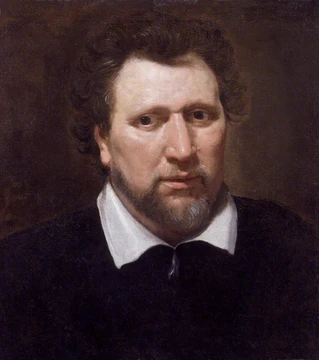
Robert Graves
American playwright, screenwriter, and theatrical producer.
Robert Ranke Graves (24 July 1895 – 7 December 1985), sometimes recorded as Robert von Ranke Graves, was an English poet, novelist, and critic. His father, Alfred Perceval Graves, was a celebrated Irish poet and figure in the Gaelic revival; both father and son were Celticists and students of Irish mythology. Graves authored over 140 works, including poems, translations, and an innovative analysis of Greek myths. His memoir of his early life and First World War service, *Good-Bye to All That* (1929), and his speculative study of poetic inspiration, *The White Goddess* (1948), have remained continuously in print. He also earned his living from popular historical novels such as *I, Claudius* (1934), *Count Belisarius* (1938), and *King Jesus* (1946), and was a prominent translator of Classical Latin and Ancient Greek texts, with versions of *The Twelve Caesars* and *The Golden Ass* praised for their clarity. Graves was born into an upper-middle-class family in Wimbledon, the eighth of ten children. His mother, Amalie Elisabeth Sophie von Ranke, was a grandniece of the historian Leopold von Ranke. At age seven, double pneumonia following measles nearly killed him, the first of three serious lung afflictions. He was educated at several preparatory schools before winning a scholarship to Charterhouse, where he began writing poetry, took up boxing, and formed an intense romantic friendship with a younger boy. Commissioned into the Royal Welch Fusiliers in 1914, he published his first poetry volume, *Over the Brazier*, in 1916. That July, he was severely wounded by shell fragments at the Battle of the Somme and was officially reported as having died of wounds, but he recovered.
- born
- April 28, 1917
- died
- February 9, 2009
- field
- Playwright, screenwriter, theatrical producer
- nationality
- American
- known_for
- Tea and Sympathy (1953), The Nun's Story (1959), I Never Sang for My Father (197
Lore & Background
Anderson was born in New York City, the son of Myra Esther (Grigg) and James Hewston Anderson, a self-made businessman. He was educated at Phillips Exeter Academy, which he later said he found a lonely experience. While there he fell in love with an older woman, an event which later becomes the basis of the plot of Tea and Sympathy. Anderson also attended Harvard University, where he took an undergraduate as well as a master's degree. He may be best-remembered as the author of Tea and Sympathy. The play made its Broadway debut in 1953 and was made into a Metro-Goldwyn-Mayer film in 1956; both starred Deborah Kerr and John Kerr. You Know I Can't Hear You When the Water's Running, a collection of four one-act comedies, opened in New York in 1967 and ran for more than 700 performances. His other successful Broadway plays were Silent Night, Lonely Night (1959) and I Never Sang for My Father (1968). He wrote the screenplays for Until They Sail (1957), The Nun's Story (1959), and The Sand Pebbles (1966). He also wrote many television scripts, including the TV play The Last Act Is a Solo (1991) and the novels After (1973) and Getting Up and Going Home (1978). He was inducted into the American Theater Hall of Fame in 1981. Anderson was married to Phyllis Stohl from 1940 until her death in 1956 and to actress Teresa Wright from 1959 until their divorce in 1978. Anderson died of pneumonia on February 9, 2009, at his home in Manhattan, aged 91. He had been suffering from Alzheimer's disease for seven years prior to his death.
Reader's Guide
As a supporter of writers' rights in theatre, Anderson was a member of the Dramatists Guild of America and was elected president in 1971. He continued to serve the non-profit organization until 1973. His selected credits include plays such as Dance Me a Song (1950) as contributing sketch writer, Tea and Sympathy (1953) as writer (original Broadway production ran 712 performances), Sabrina Fair (1954) as producer via the Playwrights' Company, All Summer Long (1955) as writer and producer via the Playwrights' Company, Time Remembered (1957) as producer via the Playwrights' Company, The Rope Dancers (1957) as producer via the Playwrights' Company, You Know I Can't Hear You When the Water's Running (1967) as writer, Silent Night, Lonely Night (1969) as writer, I Never Sang for My Father (1968) as writer, Double Solitaire (1970) as writer, and The Last Act Is a Solo (1991) as writer. His television work includes adaptations and original scripts for series such as The Philco-Goodyear Television Playhouse (1948), The Prudential Family Playhouse (1950), Studio One in Hollywood (1951), Schlitz Playhouse (1951), Suspense (1952-1953), Medallion Theatre (1953), Alcoa Hour (1956), Goodyear Playhouse (1956), Armchair Theatre/The United States Steel Hour (1956), ITV Play of the Week (1960), Play of the Week (1961), Festival (1965), Double Solitaire (1974), The Patricia Neal Story (1981), The General Motors Playwrights Theater (1991), Absolute Strangers (1991), and Getting Up and Going Home (1992). His screenplays include Tea and Sympathy (1956), Until They Sail (1957), The Nun's Story (1959), The Sand Pebbles (1966), Silent Night, Lonely Night (1969, TV movie), and I Never Sang for My Father (1970). He also wrote the novels After (1973) and Getting Up and Going Home (1978).
Did You Know?
- Anderson's play Tea and Sympathy was based on his own experience of falling in love with an older woman while a student at Phillips Exeter Academy.
- Both the Broadway production and the film adaptation of Tea and Sympathy starred Deborah Kerr and John Kerr.
- Anderson was married to actress Teresa Wright from 1959 until their divorce in 1978.
- He was inducted into the American Theater Hall of Fame in 1981.
- Anderson served as president of the Dramatists Guild of America from 1971 to 1973.
Frequently Asked Questions
Who is Robert Graves?
Robert Ranke Graves (1895–1985) was an English writer who worked across poetry, fiction, translation, and literary criticism. Over his career he produced more than 140 works spanning war verse, historical novels, classical translations, and studies of myth.
What are Robert Graves's most famous works?
His best-known titles include the historical novel I, Claudius (1934), the World War I memoir Good-Bye to All That (1929), and the mythological study The White Goddess (1948). Both the memoir and the myth study have remained continuously in print since their original publication.
What is Good-Bye to All That about?
It is Graves's autobiographical account of his experience as a soldier in the First World War, published in 1929. The book became a landmark of wartime memoir literature and has never gone out of print.
What is The White Goddess?
Published in 1948, it is a speculative work in which Graves traces patterns of poetic inspiration and archetypal figures across classical and mythological traditions. It remains a widely read, if controversial, study of myth and the poetic imagination.
Why is Robert Graves important to literary history?
Graves bridged multiple genres—war poetry, historical fiction, classical translation, and myth criticism—producing over 140 works across a long career. His influence on how writers approach ancient myth and on the tradition of literary war memoirs remains significant.
More in Playwrights And Dramatists 1-24
Spotted an error? Know more?
This is a living reference — every entry is fact-audited, and reader corrections feed straight into our audit queue. Suggest an edit · See this site's audit record