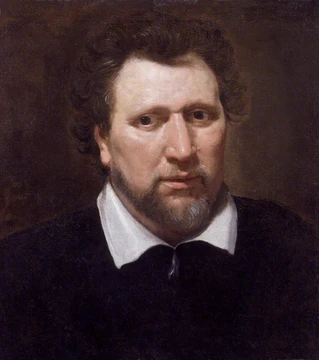
Menander
Greek playwright, best-known representative of Athenian New Comedy.

Menander (c. He was one of the most popular writers and most highly admired poets in antiquity, but his work was considered lost before the early Middle Ages. It now survives only in Latin-language adaptations by Terence and Plautus and, in the original Greek, in highly fragmentary form, most of which were discovered on papyrus in Egyptian tombs during the early to mid-20th century. In the 1950s, to the great excitement of Classicists, it was announced that a single play by Menander, Dyskolos, had finally been rediscovered in the Bodmer Papyri intact enough to be performed.
- field
- Playwright
- nationality
- Greek (Athenian)
- known_for
- Best-known representative of Athenian New Comedy; author of Dyskolos
Lore & Background
Menander was the son of well-to-do parents; his father Diopeithes is identified by some with the Athenian general and governor of the Thracian Chersonese known from the speech of Demosthenes De Chersoneso. He presumably derived his taste for comic drama from his uncle Alexis. He was the friend, associate, and perhaps pupil of Theophrastus, and was on intimate terms with the Athenian dictator Demetrius of Phalerum. He also enjoyed the patronage of Ptolemy Soter, the son of Lagus, who invited him to his court. But Menander, preferring the independence of his villa in the Piraeus and the company of his mistress Glycera, refused. According to the note of a scholiast on the Ibis of Ovid, he drowned while bathing, and his countrymen honored him with a tomb on the road leading to Athens, where it was seen by Pausanias. Numerous supposed busts of him survive, including a well-known statue in the Vatican, formerly thought to represent Gaius Marius. His rival in dramatic art (and supposedly in the affections of Glycera) was Philemon, who appears to have been more popular. Menander, however, believed himself to be the better dramatist, and, according to Aulus Gellius, used to ask Philemon: 'Don't you feel ashamed whenever you gain a victory over me?' According to Caecilius of Calacte (Porphyry in Eusebius, Praeparatio evangelica) Menander was accused of plagiarism, as his The Superstitious Man was taken from The Augur of Antiphanes, but reworkings and variations on a theme of this sort were commonplace and so the charge is a complicated one. How long complete copies of his plays survived is unclear, although 23 of them, with commentary by Michael Psellus, were said to still have been available in Constantinople in the 11th century.
Reader's Guide
Menander's significance lies in his role as the foremost playwright of Athenian New Comedy, a genre that shifted from the political satire of Old Comedy to domestic, character-driven plots. His work influenced Roman comedy through adaptations by Terence and Plautus, and through them, later European drama. These finds revolutionized the study of ancient comedy. Menander's moral maxims, such as 'Whom the gods love die young' and 'Evil communications corrupt good manners,' became proverbial and were quoted by later authors, including Paul the Apostle. His reputation in antiquity was high: he was praised by Plutarch and Quintilian, and his works were still available in Constantinople in the 11th century. The loss of his complete corpus and its gradual recovery make him a figure of enduring scholarly interest, illustrating both the fragility of ancient texts and the potential for rediscovery.
Did You Know?
- His play Dyskolos was rediscovered in the 1950s in the Bodmer Papyri intact enough to be performed.
- The phrase 'the die is cast' (Alea iacta est) is a mistranslation of a line from Menander's play Arrhephoros, quoted by Julius Caesar.
- Menander's maxim 'Evil communications corrupt good manners' from his play Thaïs is quoted in the New Testament (1 Corinthians 15:33).
More in Playwrights And Dramatists 1-24
Elsewhere in the Playwrights And Dramatists universe
Spotted an error? Know more?
This is a living reference — every entry is fact-audited, and reader corrections feed straight into our audit queue. Suggest an edit · See this site's audit record